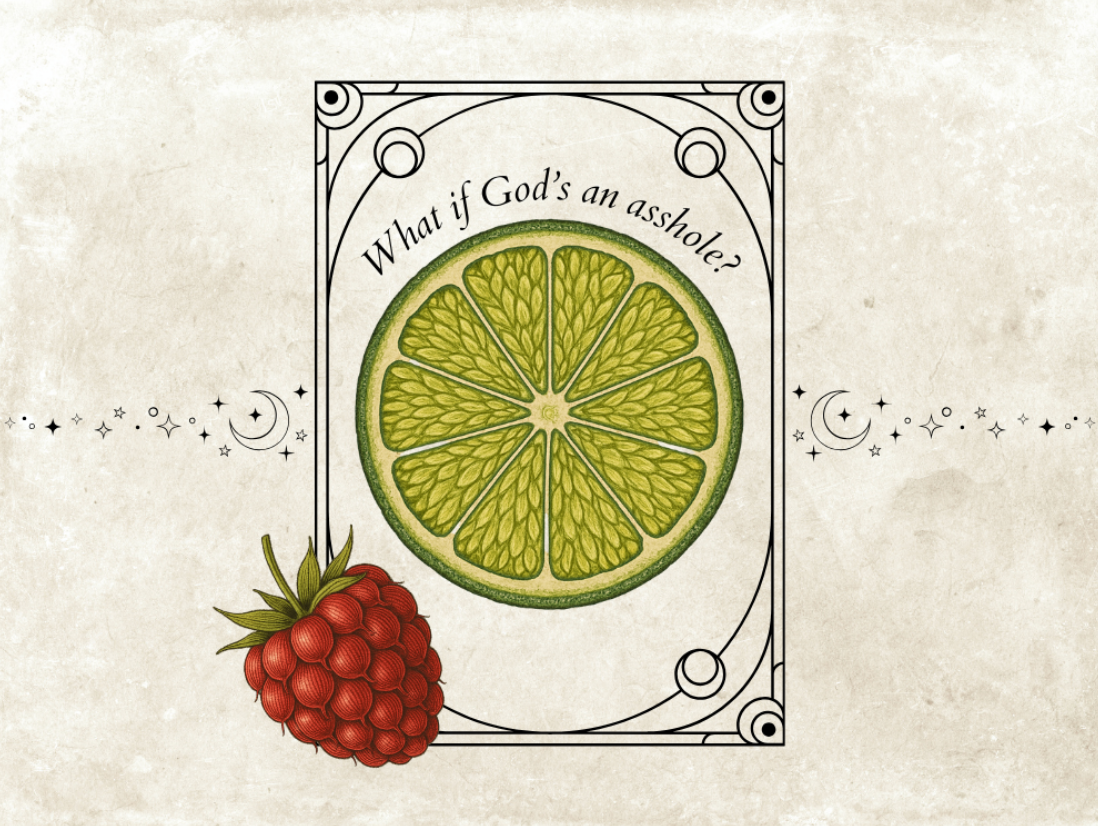
What if God's an asshole?
On raspberries, limes, and asking better questions.

Some people assume I’m here to become a nun.
Or a pastor. Or a chaplain. And yes, Harvard Divinity School has lots of alumni with all those titles. And sure, I have been known to mix things up with a sexy little pivot.
But if you’re expecting my two years back at Harvard to restore my piety and cleanse me of my sins, please don’t hold your breath. I intend to graduate as bitchy and brazen as I entered, just with another degree to back it up.
I was thirteen years old when I first saw God in a raspberry.
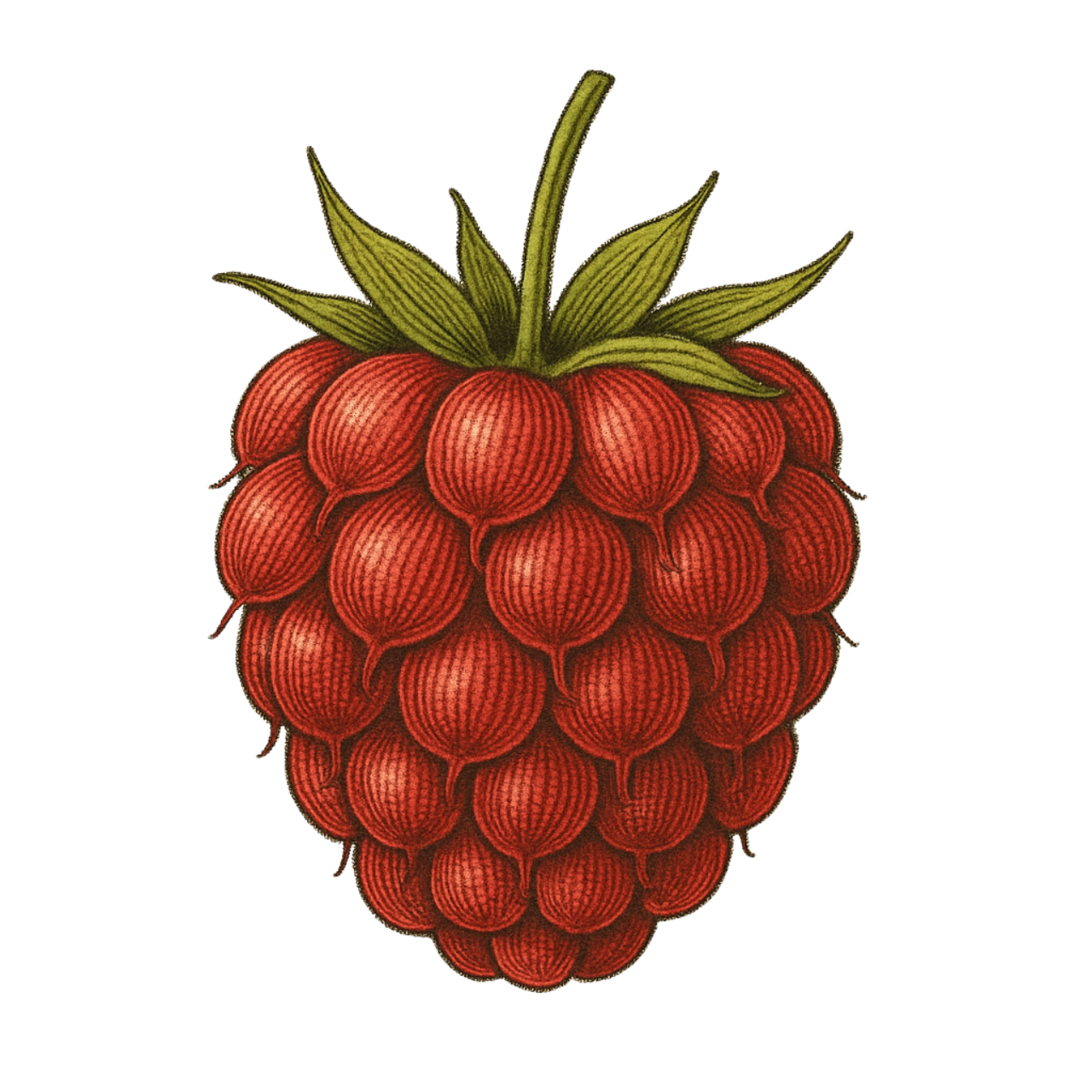
I tilted my head back, looked toward the sun, held an extra juicy raspberry a few inches from my eye, and squinted while I counted each ripe drupelet, one by one. Have you ever really looked at a raspberry up close? I found something divine in those juice-filled little bubbles, coming together in perfect order to form something tiny and delicious.
Once I saw God in a raspberry, I started looking at all my fruit a little closer.
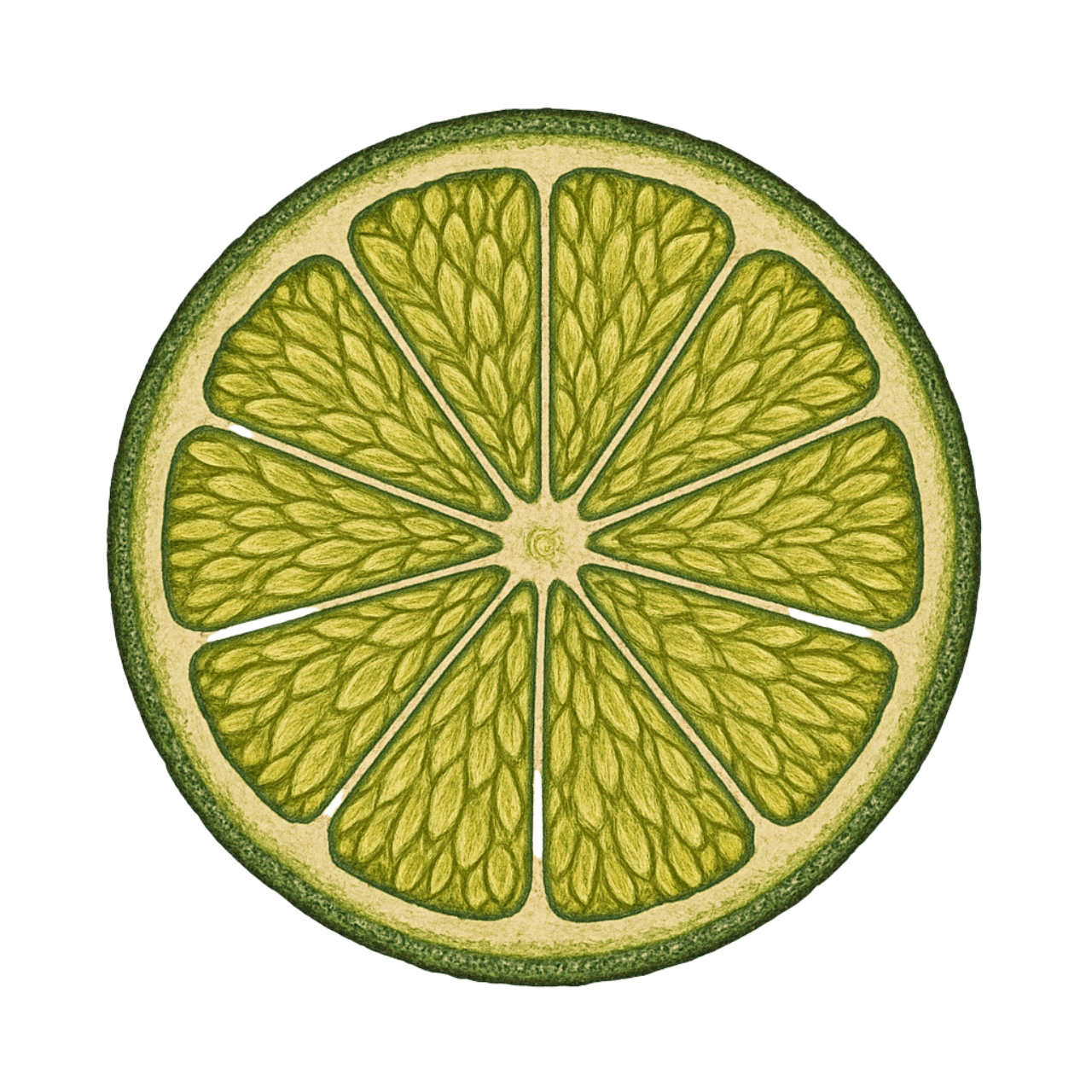
Have you ever looked at the inside of a lime?
I mean really looked? Slice one open and hold it up to the light. It’s a literal kaleidoscope in there. Tiny vesicles of juice pressed together in sacred geometry. Little citrus cathedrals. The first time I really looked at a lime, I decided I could never be an atheist. How can you not believe in God when citrus exists?
A decade later, I was sitting in the living room of my Everett, Massachusetts apartment with tear stained cheeks, eating raspberries straight from the carton after another explosive fight with my then-husband, when I realized: I’d spent my whole life asking the wrong questions about God.
Growing up, we talked a lot about the evidence of God’s existence. Even if I hadn’t found fruit so utterly convincing, the apologetics lectures we heard at teen camp every summer would’ve equipped me to win any debate - at least in my own mind.
But from what I could tell, we jumped straight from does God exist? to what can we do to make our lives most pleasing to Him so we can get into Heaven?
At 23, raspberry in hand, I took a few steps back.
“I know God exists,” I said aloud, looking at the tiny hairlike pistils poking out from the crimson drupelets, “but… did we ever stop to consider that maybe He’s an asshole?”
That was the beginning of it.
Cracks had been forming for years in the image of the God I’d inherited, but in that moment, the whole thing shattered. The understanding of God which had shaped my entire world fractured beyond recognition.
“Okay,” I took a breath. “I believe there’s a God. But just because there is a God does that mean God is good? We’ve never even asked that. And now that I think about it… there’s a lot to suggest that maybe He’s not.”
I was desperate to put the pieces back together. But the beliefs I’d taken for granted minutes earlier had been so thoroughly obliterated, they slipped through my fingers like sand.
Still, there’s a lot of space between a nun and an atheist.
And somewhere in between the two is where you’ll find me, eating raspberries and holding lime slices to the light.
These days, I identify as an Omniest. I see God everywhere, and in almost everything, and I consider most religions reflective fragments of a divine whole.
When I say “God,” I’m never picturing a bearded man in the sky or the God of any one sacred text. But if that’s the God you know, that’s exactly who I mean.
If the idea of God makes your eyes roll, but you feel comfort in the arms of the Universe, then that’s what I mean too.
I used to identify as willfully agnostic; the closest to atheist limes will ever let me be. In those years, I started swapping the word “God” for “Universe” in my head when I heard religious people speak. I was surprised how rarely I found it altered the meaning of their words.
When my parents called to remind me of God’s love for me, my brain would translate it to, “The Universe loves you, Kayci, just don’t forget that.”
This silent practice let me access the love in their message in a way I could receive it, and helped me stay connected to my wonder for the divine even when the concept of God had been shrouded in shame.
So if the word God makes your eyes roll, and another word resonates more deeply with you, feel free to take that liberty in any of my writing.
God, as I see Her, cannot be contained by a single dogma, let alone a single name.
I’m interested in the philosophy of religion, but more so, I’m interested in the consequences of religion.
I came to divinity school to interrogate everything I once took for granted about God, religion, and our beliefs.
Take the belief that God is good.
That sounds simple. But when you look at it from the right angle, the whole thing starts to unravel:
- Why do we believe that God is good?
- Who benefits from that belief?
- What happens to me if I believe that God is good?
- What happens to us, to our communities locally and globally, if we all believe God is good?
Now, those are fairly straightforward questions in isolation. But when you start applying them to entire belief systems, things get sticky quick.
For example:
- What are the consequences personally if I believe that God is good and that God is okay with non-Christians burning in hell for eternity?
- Does that belief make it easier for me to conceive of myself as a good person while being okay with the suffering of my neighbors?
These are the kinds of questions I’m here to ask.
I’m getting my Master’s in Theological Studies, but if I’m being honest, I didn’t even know what theology was when I applied. The Oxford Dictionary says it’s “the study of the nature of God and religious belief”, which felt abstract at best, but just enticing enough for me to quit my job and decide to study it full time.
A month into divinity school, I’m pinching myself every day because, y’all…I think I might actually be in school to read and write and talk and cry and think about the very questions that set my soul on fire.
I’ve come to believe that theology, at its core, is a bunch of (mostly brilliant) people asking:
What does it mean if we believe x? And who suffers, or thrives, if we do?
So if you’re wondering what I’m up to, just know I’m somewhere in between, slicing limes, eating raspberries, and asking better questions about God.
If this stirred something in you, share it with a friend who asks the hard questions too.
✨ Questions 4 U:
- Where do you see God outside of scripture?
- What questions do you have about God that you’ve not been allowed to ask?
Feel free to drop your answers in the comments.
This is the Dirty Divine.
We’re not afraid to get messy on our way to something sacred.